


Police fabricated evidence against me but civil liberties concern us all Sabir on Security
New in Ceasefire, Sabir on Security - Posted on Sunday, July 15, 2012 13:28 - 5 Comments
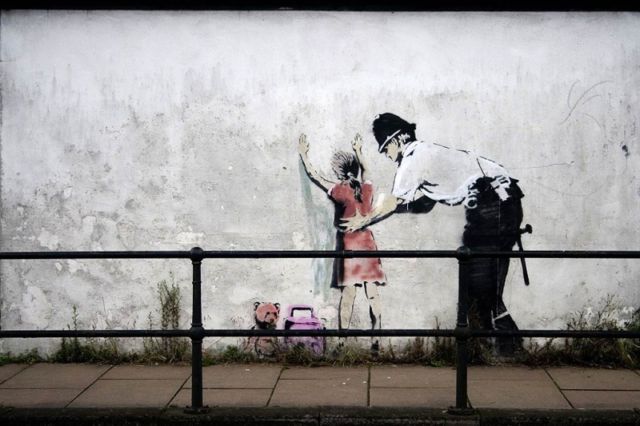
“We are now dangerously slipping toward a situation where the police, and law enforcement agencies in general, have too much power and where we, the public, are increasingly at the mercy of the whims of officers and agencies, rather than the impartial rule of law.”
Civil rights are meant to be a central component of a liberal democracy, which is why, prior to my wrongful arrest and false imprisonment for possessing a library book that was given the false title of ‘Al-Qaeda Training Manual’ by the US Government, I had always believed that we all had equal protection under civil rights law and statues. I was wrong.
The truth is that the new and revitalised powers, laws and offences which have been introduced since the launch of the ‘War on Terror’ are undermining the very essence of civil rights in the UK, amongst others.
The main reason for this, as I see it, is that as the state acquires more powers, the public grows less resistance and more compliant. We are now dangerously slipping toward a situation where the police, and law enforcement agencies in general, have too much power and where we, the public, are increasingly at the mercy of the whims of officers and agencies, rather than the impartial rule of law. I speak from experience.
Today, UK media, notably the Observer, is reporting the story of how police officers investigating my arrest had simply fabricated evidence in order to bolster their case against me. This is an abuse of power I would never have imagined had I not been confronted with its consequences so directly.
I believe it is important that all of us, regardless of background or political outlook, should take a serious look at the state of our civil rights. A candid examination of where we are today as a nation makes for grim viewing.
It is hardly breaking news that Muslims are prominent victims of the hardening grip of the state. What is most frightening, however, is that if you’re a member of the Muslim community, then your civil rights can be, and are being, revoked when the State decides.
My experiences and investigations have made me realise that civil rights, which are meant to be fully given to people when they are at their most vulnerable don’t mean all that much in practice, especially for Muslims who are facing allegations of ‘terrorism’ and ‘extremism’.
Despite its seriousness, my case is nowhere near as bad as some of the others. Take the Farooqi family case in Manchester. Greater Manchester Police are exercising new anti-terror powers to seize the family home because the father was convicted of terrorism offences under somewhat questionable (and entrapping) circumstances.
The point is that abuses of Muslims (and increasingly political non-Muslims) are occurring on a daily basis yet go unnoticed. If you are not going to stand and fight today, when the Muslim (and increasingly wider) communities are being systematically and pro-actively targeted, then when will you?
Though rights are conditional, they can only be violated to the extent that you allow them to be. Since my legal settlement in 2011, for instance, my rights are no longer particularly violated or undermined anymore because 1) I know what they are and 2) I make sure anyone who intends to take them away understands that. You have to do the same, and to that effect, I’d like to highlight two important points.
Firstly, it is crucial that all citizens, Muslims and non-Muslims, engage with the subject of civil rights. Rights don’t belong to any race or religion, and threats to one community are an attack on the rights of all communities. Indeed, speak to political campaigners or activists, and you will soon realise how and why these rights are under threat everywhere and for everyone. Concerned citizens and campaigners alike must make friends with everyone, regardless of colour, religion, culture or creed and realise that strength only comes through solidarity within and between communities.
Secondly, whenever the subject of civil rights is raised, the natural response I routinely hear is “what can we do”? To that effect, I’d like to suggest two key avenues for action.
First, educate yourself – Universities are only brick buildings, where you have to pay thousands of pounds to attend. Yet, you can give yourself a full education without going to a university or spending a single penny. Learning doesn’t cost anything except your time, so make time and learn about the basics of the issues before trying to change them.
Once you have a basic understanding of the issues, you will naturally learn of the best methods to affect change. Yes, change will be slow and sometimes frustratingly so, but you must pace yourself. Patience is order of the day.
Secondly, protecting our civil rights will not come cheap. We must dig deep into our pockets and start funding research, learning and legal action. There are a lot of sincere and committed people and organisations (Muslim and non-Muslims) that are trying to affect change in Britain today for everybody’s benefit. Though you might not be able to directly bring about change, by ensuring specific organisations have the financial & legal resources to do so, you will be contributing in two of the most important ways.
The same applies with research and news, and the need to ensure that those who can get access to information are being given the tools and support they so badly need. Individuals and communities must contribute to the funding of research and learning.
The government does not want us, or for that matter you, to say things as they are. The government’s official counter-terrorism strategy (CONTEST), for example, specifically makes the case that people must be made to feel and believe that everything is okay in regards to counter-terrorism efforts so they can go about their lives freely and with confidence. The truth is that people are only going about their lives freely and with confidence because they are uninformed about the realities of a nameless war that is destroying lives and devastating communities.
Innocent people have been, are being, and will continue to be locked away unjustly and have their rights violated for reasons that will only fully become clear in history book, if at all. But it doesn’t need to be so. We must remember that until we all take a firm decision to get active and get involved, this will continue to remain an issue, even if it continues to be portrayed as a marginal nuisance affecting a minority.
Let me say it again: today it might be somebody else, but tomorrow, as I have learnt the hard way, it could be you or your loved ones. It’s better to get organised now than to be caught on the hop.
5 Comments
Bobby
i love the bit about universities. look forward to reading more.
stops mail calls to 8 abbotsburyway lowerham Plymouth devbon pl22hs ,Calgary camnada 403-2441880 mp lied to me ne505944b,torture sounfd 24-7 gang stalking
Darren Gladue
My family has been the target of police misuse of justice and malicious prosecution. Recently my wife and mother of our 8 year old autistic son “Kenny” had arrived at his school sick and exhausted as a direct result of being tired from the rigors of raising special needs children. The principal of the school called family services accusing my wife of being high on drugs. My wife was accompanied by her friend who was driving my wife to her house to rest and stay while our home was being renovated. The worker for the Ministry of Children and Families accompanied by the RCMP asked my wife to just rest at the school and took my sons jacket folded it like a pillow and asked my wife to have a nap.
The next step that was taken was a number of RCMP members accompanied with an MCFD worker stormed our home that I was renovating as I am a building contractor. The police stormed our home without a search warrant and began to ransack our home when I asked the officer what they where doing he said ” oh just keeping the piece”. The social worker asked about the whereabouts of my 15 year old son “Dustin” and said that his mother was sleeping at the school. I informed her that that was not his mother and that she was not residing here as Dustins mother lives in another town some 8-10 hours away by car.
I was immediately following arrested because one of the officers noticed pink insulation a orange extention cord and a jack hammer he said “what is going on here” I told him we were renovating, he then placed handcuffs on me as tight as they would close and informed me that I was under arrest for production of a controled substance.
I spent the night in jail and was released the next day with no winter clothing on as I was placed in custody in nothing more than a t-shirt and light flanel pants in northern British Columbia in sub zero temperatures. I was charged with a firearm offence for a rifle that is my own and have had the training and cedentials to obtian the same. I along with my 15 year old son and wife were charged with drug offences that have yet to be disclosed and most likely be fabricated or planted as evidence in an effort to keep our children in the hands of the state.
Recently I met with a social worker to evaluate why and what is happening with my children. Kevin Longard the MCFD social worker was brought from another jurisdiction to work our case and had never met or known any of my family. He informed me that I was a gang member and an enforcer for a gang that he would not disclose which. I informed hom that these were lies and unsubstantiated he didnt care and would not believe me. I offered to take a lie detector and he refused. Our children are at the mercy of the system that can use whatever tactic they see fit they can rely on heresay evidence and we cannot even voice a defence at the initial hearing that is this Monday. They are taking our kids for 6 months. My wife and I both submitted urine samples to the ministy that were completely clean.
Following the home invasion we discovered several covert surveillance throughout our home and in our bedroom and bathrooms. Once we discovered the hub that was streaming the lightbulbs and various other disguised survielance gear, we noticed a sticker that said “no warrant raid” on what appeared to be a listening device that was also installed. I photographed the equipment as I dismantled it to later notice that the surveillance team had went into my iphone and wirelessly photoshoped the evidence that I had compiled.
In Canada we have the “Charter of Rights” that is supposed to protect citizens from these types of invasion of privacy and wrongfull arrest and malicious prosecution. Unfortunately the police state is attempting to secure funding through gang task force initiatives fabricating false information on citizens with hopes of making convictions using any tact they see fit.
We are victims of serious crime by the people who we expect to uphold the laws that make free countries free and law abiding. We intend to seek justice with this matter and hope that we can set a precedent to protect the civil liberties of our fellow countrymen.
If you have any questions or would like to see photos of the survielance equipment of the photoshoped evidence kindly email me at [email protected] or call me in Canada at 2509968113.
Yours Truly
Darren Gladue.
It’s absolutely true that civil rights are fragile, and can easily be taken away. I am the target of an organised stalking campaign in the UK, which is organised by members of my family, who have powerful connections. My civil rights have been taken away, and in this situation there is no legal remedy.
It’s hard to believe that in Britain in 2016 a person’s life can be totally destroyed by the state, setting them up for forced suicide or mental breakdown, but it is happening. Please see my blog below where I am documenting my experiences.
https://organisedstalkinguk.wordpress.com
Thanks

Thanks for this fantastic contribution Rizwaan, I’ve been eagerly awaiting your next piece in Ceasefire! I Your advice on how to affect change is balanced and powerful – much appreciated encouragement there. Keep up the fight!